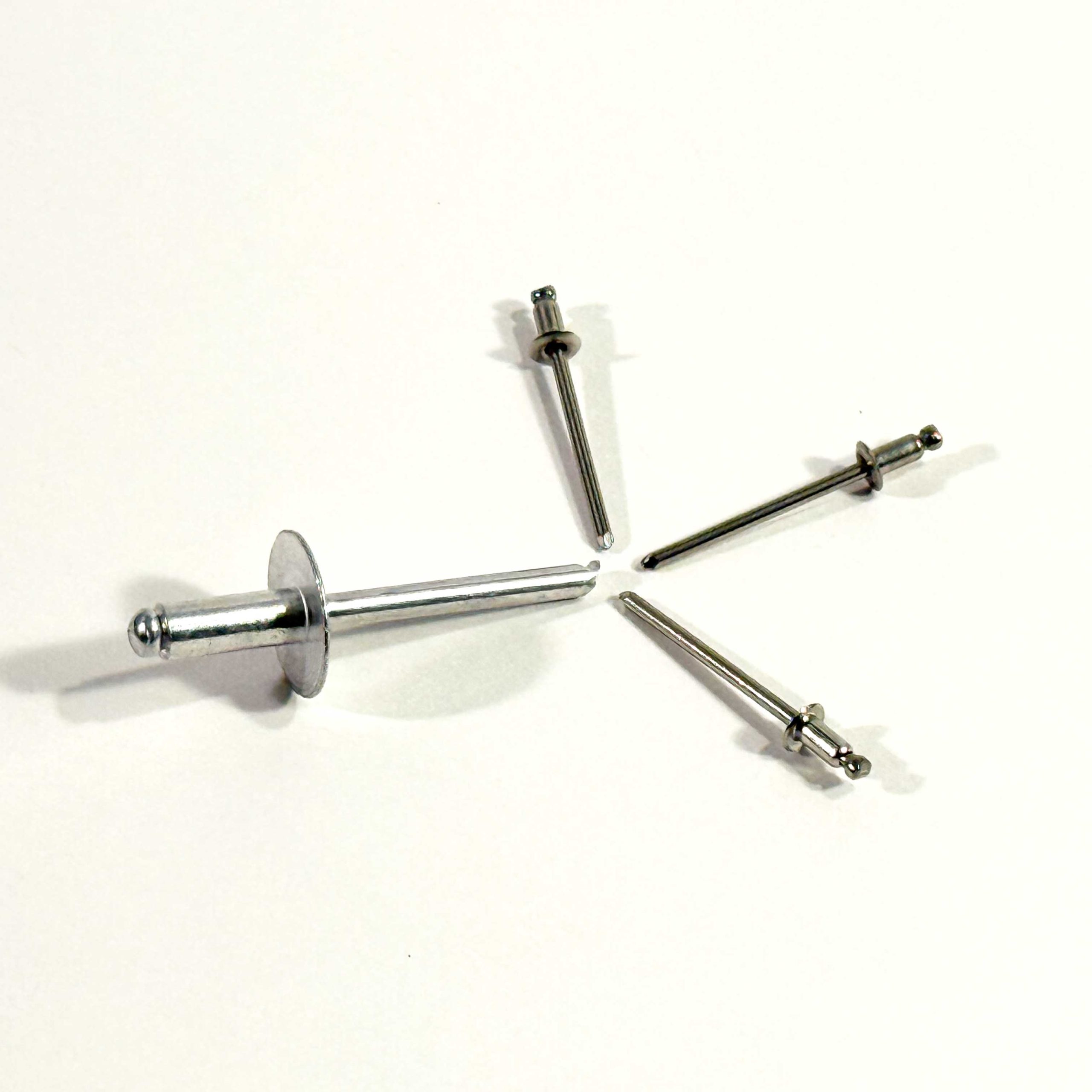
Blind Rivets (Open-End, Closed-End & Structural)
Blind rivets are permanent fasteners designed for installation when access is available from only one side of the assembly. A mandrel-driven tool pulls the stem, forming a blind-side head that clamps the material stack before the mandrel fractures at a controlled break point.
G-Fast supplies blind rivets through qualified domestic and global sources. We support part number cross-referencing, specification verification, and production blanket programs for industrial customers.
Open-End vs. Closed-End Blind Rivets
Open-End Blind Rivets
• Most common configuration
• Suitable for general industrial fastening
• Not fluid-tight
• Common in sheet metal assemblies, brackets, covers, and enclosures
Closed-End (Sealed) Blind Rivets
• Fully enclosed blind-side formation
• Improved resistance to moisture and air passage
• Used in outdoor equipment, trailer bodies, and electrical enclosures
• Selected when sealing performance is required
Standard vs. Structural Blind Rivets
Standard (open-end) blind rivets are typically used in light- to medium-duty applications where speed and cost efficiency are priorities.
Structural blind rivets provide higher shear and tensile performance, increased preload, and improved vibration resistance. These are selected when joint performance requirements exceed standard blind rivet capability.
Request a Quote
Provide the following for review:
• Existing part number (if applicable)
• Diameter and grip range
• Head style
• Body material
• Mandrel material
• Estimated annual usage
• Print or sample
G-Fast supports blind rivet sourcing with disciplined specification review, supply continuity planning, and competitive lead times.
Body and Mandrel Material Combinations
| Rivet Body |
Mandrel |
Typical Use |
Corrosion Consideration |
Relative Strength |
| Aluminum |
Aluminum |
Light sheet, indoor |
Good compatibility |
Low–Medium |
| Aluminum |
Steel |
General industrial |
Mandrel may corrode first |
Medium |
| Steel |
Steel |
Interior industrial |
Requires plating |
High |
| Stainless |
Stainless |
Outdoor / washdown |
Strong corrosion resistance |
High |
| Stainless |
Steel |
Mixed environments |
Mandrel corrosion risk |
High |
| Brass |
Steel |
Electrical / specialty |
Environment dependent |
Medium |
Mandrel material should be specified explicitly in outdoor or corrosive environments. Mixed-material combinations may introduce galvanic interaction depending on base materials.
Head Style Comparison
| Head Style |
When to Use |
Advantages |
Considerations |
| Protruding (Dome) |
General-purpose |
Cost-effective, common |
Visible head |
| Large Flange |
Thin / soft materials |
Increased bearing surface |
Larger head diameter |
| Countersunk (100° / 120°) |
Flush surface required |
Clean surface finish |
Requires precise countersink |
| Multi-Grip |
Variable stack thickness |
Reduces SKU inventory |
Confirm performance range |
| Bulb / Tri-Fold |
Soft materials |
Large blind-side footprint |
Not for high shear loads |
Diameter and Grip Range
Blind rivets are available in standard and custom diameters including 3/32", 1/8", 5/32", 3/16", 1/4" and larger upon request.
Grip range must match total material stack thickness. Installing outside of the recommended grip range can prevent proper blind-side formation and reduce joint performance.</p.
Supply & Fulfillment Options
• Carton quantities available for immediate shipment
• Drop-ship programs supported
• Production blanket orders and scheduled releases
• Cross-referencing of existing industry part numbers
• Specification review prior to order placement