Lock Washers for Industrial & OEM Applications
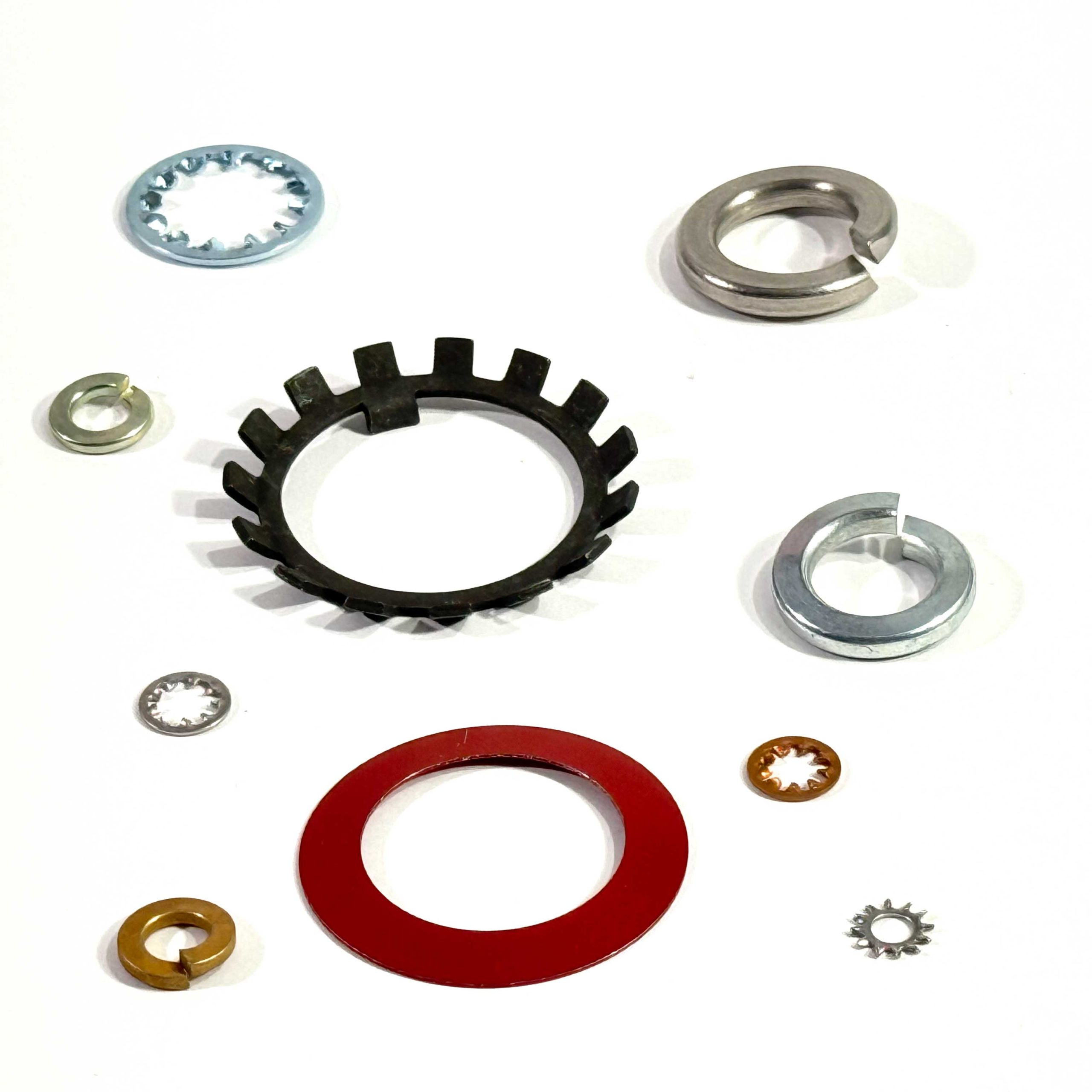
Lock washers are mechanical washers used to resist loosening in bolted joints subjected to vibration, shock, and dynamic loading. G-Fast supplies lock washers per print or specification across common types and materials, including split, internal tooth, external tooth, combination tooth, and wedge-lock systems.
From general-purpose assemblies to high-vibration environments, we quote lock washers directly from your defined requirements, including material, dimensions, hardness, finish, and application specifications.
What Is a Lock Washer?
A lock washer is a hardened or spring-tempered mechanical washer designed to resist rotation of a fastener after tightening. Depending on the design, lock washers can provide additional resistance to fastener loosening in mechanical assemblies exposed to vibration, movement, or cyclic loading.
Lock washers do not replace proper torque. Instead, they can help maintain clamp force as the joint settles, vibrates, or cycles under load. Proper lock washer selection should consider the fastener, joint design, loading conditions and required locking performance.
Lock Washer Types
Split Lock Washer (Helical)
A general-purpose mechanical washer with a helical split design, commonly used in automotive, machinery, equipment, and construction assemblies.
Internal Tooth Lock Washer (Star)
An internal tooth lock washer is used where the washer must fit within the fastener head diameter. The teeth engage the mating surface to provide resistance to rotation.
External Tooth Lock Washer (Star)
An external tooth lock washer provides increased surface engagement and is commonly selected for applications using larger fastener heads or where additional resistance to rotation is required.
Combination Tooth Lock Washer
Combination tooth lock washers incorporate multiple tooth configurations and are used where increased surface grip and locking performance are required.
Wedge Lock Washer (Nord-Lock Type)
Wedge lock washers use a wedge-locking principle and are designed for demanding, high-vibration applications such as rail equipment, heavy equipment, industrial machinery, and other dynamic assemblies.
Fasteneering® Insight
Locking performance depends on the entire bolted joint, not just the washer.
Mechanical washer selection should match the fastener grade, washer hardness, joint materials, applied load, installation torque, and vibration profile. The appropriate lock washer design can vary significantly depending on the application and joint configuration.
Applications
Lock washers and other mechanical washers are used across automotive, industrial machinery, electronics, structural, equipment, and high-vibration applications.
Common applications include mechanical assemblies where fasteners are exposed to vibration, shock, cyclic loading, or other conditions that can contribute to loosening.
USA Advantage
Domestic sourcing can support quality control, shorter lead times, and compliance requirements for U.S. industrial and OEM applications.
G-Fast supports customers requiring U.S.-sourced lock washers and mechanical washers for production and engineered applications.
Engineering Review
Every inquiry begins with your print or defined specification.
G-Fast reviews required dimensions, material, hardness, finish, tolerances, and performance requirements to help ensure the specified lock washers are suitable for the intended assembly.
Manufacturing Support
G-Fast supplies standard and custom lock washers and mechanical washers for small-batch, prototype, and production requirements.
Products can be manufactured to customer drawings, samples, technical specifications and applicable industry standards.
How G-Fast Supports Lock Washer Programs
G-Fast supplies lock washers produced to customer specifications and recognized industry standards.
For applications requiring specific materials, hardness, finishes, dimensions, or performance requirements, we review supplied drawings or specifications for manufacturability, feasibility, and cost efficiency prior to production.
Where appropriate, we may suggest alternative materials, hardness levels, or locking methods. Any recommended changes are reviewed and approved by the customer’s engineering team and incorporated into updated documentation before manufacturing begins.