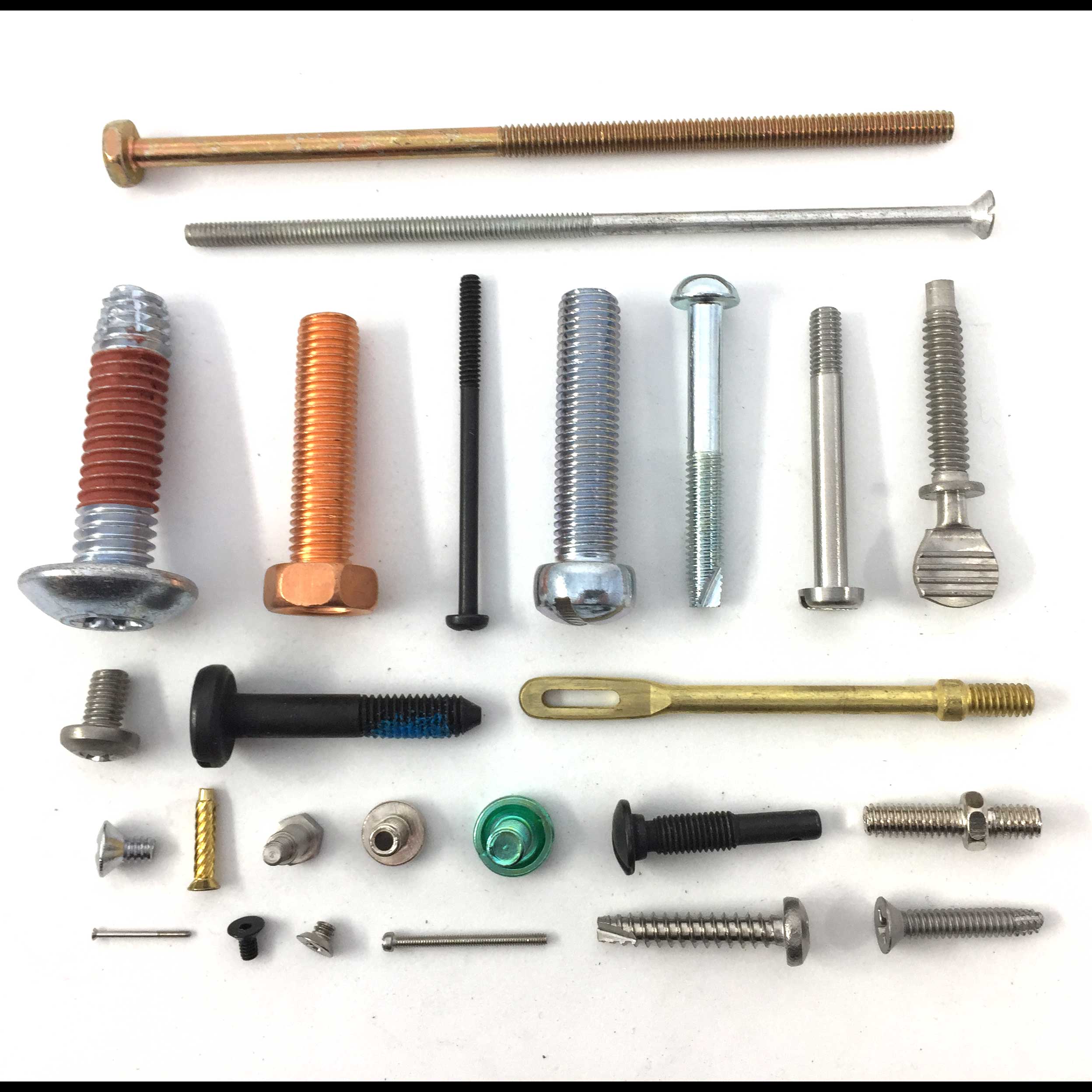
Machine screws are fully threaded fasteners used in assemblies where threads are already formed either in a tapped hole or with a mating nut.
G-Fast supplies machine screws produced to customer print or specification, supporting applications that require precise fit, repeatable assembly, and consistent clamping performance.
These fasteners are used across electronics, machinery, automotive systems, enclosures, and structural components where controlled thread engagement is required.
Threads & Standards of Machine Screws
Machine screws are defined by thread form, diameter, and pitch.
G-Fast supplies unified (UNC/UNF) and metric threads, including non-standard pitches per specification.
Machine screws rely on pre-existing threads, making them suitable for precise, repeatable assemblies.
Materials and Finishes
Material selection is based on load, environment, and compatibility.
Carbon Steel (Zinc Plated), Alloy Steel, Stainless Steel (A2/A4), Brass and Copper Alloys.
Finishes and coatings are specified per application requirements.
Fasteneering® Insight
Machine screws depend on the quality of the mating thread.
Performance is influenced by thread fit, hole preparation, material pairing, and installation torque.
G-Fast reviews specifications for manufacturability, material compatibility, and cost efficiency while working strictly to customer-defined requirements.
Quality & Traceability
ISO-9001 framework, in-process dimensional monitoring, N.I.S.T. traceable inspection equipment, two-way traceable lot control, and seven-year record retention.
Applications
Electronics, industrial machinery, automotive systems, medical devices, and structural hardware.
Made in USA Advantage
Made in USA | Best Available Lead Times G-Fast combines domestic manufacturing excellence with dependable communication and supply-chain reliability.
Engineering Review
G-Fast’s engineers review customer drawings and specifications for manufacturability, feasibility, and cost efficiency.
All recommendations must be approved by the customer’s engineering team and reflected on updated prints before production.
How G-fast Supports Machine Screw Programs
G-Fast supplies machine screws produced to customer specifications and recognized industry standards.
For applications requiring specific materials, thread forms, finishes, or performance requirements, we review supplied drawings or specifications for manufacturability, feasibility, and cost efficiency prior to production.
Where appropriate, we may suggest alternative materials or production methods. Any recommended changes are reviewed and approved by the customer’s engineering team and incorporated into updated documentation before manufacturing begins.
Frequently Ask Questions
- What head style minimizes stress concentration in thin sheet metal assemblies?
Truss head machine screws minimize stress concentration in thin sheet metal by distributing clamping load over a wide surface. They provide better pullout resistance than pan heads in light-gauge materials.
- How do I determine the correct length for a machine screw in a through-hole application?
For through-hole assemblies, the screw length should equal the total grip length (combined thickness of the materials being fastened) plus the nut height, with at least one to two threads protruding beyond the nut. This ensures proper thread engagement without bottoming out or compromising joint integrity.
- Can G-Fast supply custom machine screws with non-standard thread pitches?
Yes. G-Fast manufactures custom machine screws with non-standard thread forms, pitches, and lengths for OEM customers who require fasteners outside of catalog specifications, supported by engineering drawings and material certifications.
- What is the difference between a machine screw and a self-tapping screw?
Machine screws are designed to be used with a pre-tapped hole or a matching nut, while self-tapping screws create their own threads as they are driven into the material. As machine screws engage with pre-formed threads, they are commonly used in assemblies that require precise alignment, repeatable fastening, and reliable load distribution.
- How does material selection affect the performance of machine screws in high-temperature applications?
Standard carbon steel loses strength and may oxidize at elevated temperatures. For high-heat environments, alloy steel grades, stainless variants, or superalloy machine screws maintain mechanical integrity and resist thermal expansion effects that could loosen joints over repeated heat cycles.