by Steve Greenberg | Mar 27, 2025 | Uncategorized
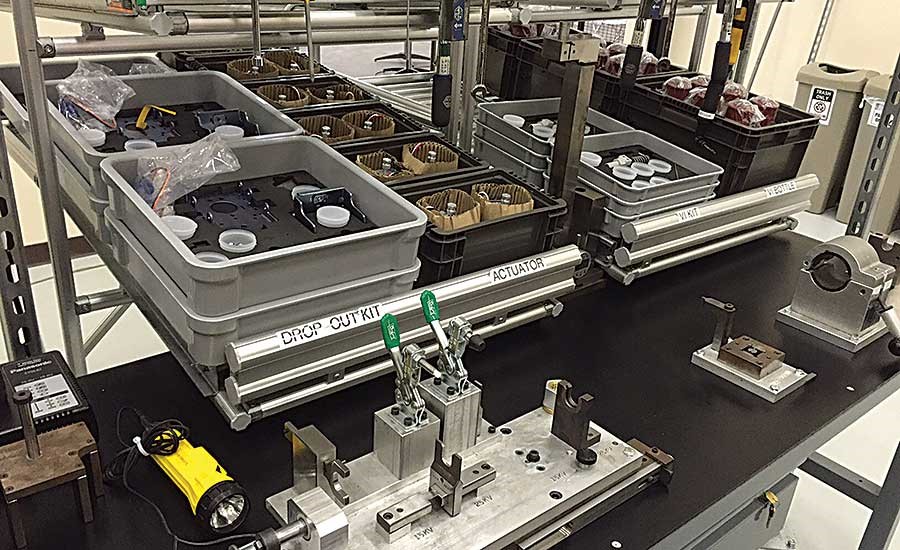
Kitting and assemblies are essential services in modern manufacturing and logistics, helping businesses streamline operations, reduce costs, and improve efficiency. By grouping related components into ready-to-use kits or assembling parts before shipment, companies can optimize their supply chains, enhance production workflows, and deliver higher-quality products to customers. These services are widely used across industries such as automotive, aerospace, electronics, healthcare, and industrial manufacturing.
What Are Kitting and Assemblies?
Kitting refers to the process of gathering and packaging related components into a single unit, simplifying inventory management and reducing assembly time. Assemblies involve pre-assembling parts or subcomponents before final product integration, improving efficiency and consistency in manufacturing.
Key Features and Benefits
- Improved Efficiency – Reduces time spent on sourcing and organizing parts, allowing faster production and assembly.
- Cost Savings – Minimizes labor costs, storage expenses, and inventory holding times.
- Error Reduction – Ensures accuracy in component selection, reducing mistakes and rework.
- Faster Order Fulfillment – Speeds up the supply chain by delivering pre-packaged or pre-assembled parts to end users.
- Customization Flexibility – Enables tailored solutions for specific applications, meeting unique customer needs.
Common Applications of Kitting and Assemblies
Many industries rely on kitting and assemblies to improve operations and product quality:
- Automotive Industry – Pre-packaged kits for repair and maintenance, pre-assembled components for production lines.
- Aerospace Manufacturing – Kitted fasteners, wiring harnesses, and structural components for aircraft assembly.
- Electronics and Technology – Circuit board kits, pre-assembled electrical components, and hardware bundles.
- Medical and Healthcare – Surgical kits, medical device subassemblies, and diagnostic equipment components.
- Industrial Equipment – Machinery spare parts kits, factory automation assemblies, and tool sets.
Types of Kitting and Assembly Services
There are several types of kitting and assembly services tailored to different business needs:
- Product Kitting – Bundling related items for sale or shipment, such as toolkits or repair kits.
- Pre-Assembly Services – Assembling components before final production to reduce assembly line time.
- Customized Packaging – Organizing parts in labeled or barcoded packaging for easy identification and usage.
- Just-in-Time (JIT) Kitting – Delivering kits precisely when needed, reducing excess inventory storage.
- Aftermarket and Service Kits – Providing replacement parts and repair kits for maintenance and servicing.
Choosing the Right Kitting and Assembly Provider
When selecting a kitting and assembly partner, consider the following factors:
- Industry Experience – Choose a provider with expertise in your industry’s requirements.
- Quality Assurance – Ensure strict quality control measures are in place to prevent defects and misassemblies.
- Scalability – The provider should be able to handle small-scale and large-scale production needs.
- Technology Integration – Look for automated tracking, barcoding, and inventory management capabilities.
- Customization Capabilities – Ensure the ability to tailor kits and assemblies to your specific product needs.
Conclusion
Kitting and assemblies are valuable solutions for improving efficiency, reducing costs, and streamlining manufacturing and logistics. Whether in automotive, aerospace, healthcare, or electronics industries, these services enhance production speed, accuracy, and customer satisfaction. By partnering with a reliable kitting and assembly provider, businesses can optimize their operations and deliver high-quality products to market faster.
For expert kitting and assembly solutions, work with a trusted provider that offers customized, high-precision services to meet your specific needs.

by Steve Greenberg | Mar 24, 2025 | Screws
In many assemblies, standard fasteners work., In others, they don’t.
When dimensions, materials, tolerances, or performance requirements fall outside standard specifications, the fastener must be produced to print.
That’s where custom screws come in.
What Are Custom Screws?
Custom screws are made-to-print fasteners produced according to a specific engineering drawing or technical specification rather than selected from a catalog.
These screws are designed to meet precise requirements such as:
- Non-standard dimensions or thread sizes
- Tight tolerances and critical fit conditions
- Specialized materials or heat treatments
- Unique head styles or drive configurations
- Custom coatings or corrosion-resistant finishes
In most cases, the design already exists the goal is to manufacture it accurately and consistently at scale.
Where Custom Screws are Used?
Custom screws are used when standard hardware cannot meet the requirements of the assembly.
Typical scenarios include:
• Tight tolerance assemblies
• Space-constrained designs
• High-load or high-cycle applications
• Corrosive or temperature-sensitive environments
• Legacy parts requiring replacement
In these cases, modifying a standard fastener is usually not a reliable solution. The fastener needs to be made to the requirement.
Custom Screws vs Standard Fasteners
Standard fasteners are mass-produced for general applications, making them cost-effective and readily available. However, they are limited by predefined sizes, materials, and tolerances.
Custom screws, on the other hand, offer:
- Application-specific design
- Greater control over material and performance
- Improved reliability in critical systems
For industries where failure is not an option such as automotive, aerospace, industrial equipment, and electronics custom fasteners are often the preferred choice.
Material and Design Considerations
Material and geometry are selected based on how the fastener performs in the joint.
Common materials include:
• Stainless steel
• Alloy steel
• Titanium
• Brass and copper alloys
Selection depends on load requirements, environment, and compatibility with mating components.
Head style, drive type, and thread form are defined by installation method and performance requirements not preference.
Fasteneering® Perspective
Custom fasteners are not designed in isolation they are part of the system.
At G-Fast, we review supplied prints for manufacturability, material suitability, and cost efficiency based on production method.
We may suggest alternative tolerances, materials, or processes where appropriate.
All changes are reviewed and approved by the customer’s engineering team before production.
We do not design the part we manufacture and supply to your defined requirements.
How G-Fast Supports Custom Screw Programs
G-Fast supplies custom screws produced to customer specifications and recognized industry standards.
For applications requiring specific materials, finishes, or performance requirements, we review supplied drawings or specifications for manufacturability, feasibility, and cost efficiency prior to production.
Where appropriate, we may suggest alternative materials or production methods. Any recommended changes are reviewed and approved by the customer’s engineering team and incorporated into updated documentation before manufacturing begins.

by Steve Greenberg | Mar 18, 2025 | bolts
Fasteners are essential components in construction, manufacturing, and various industrial applications. Among the strongest and most reliable options available are hot forged bolts, known for their superior strength, durability, and resistance to extreme conditions. These bolts are widely used in industries where high-performance fastening solutions are required.
The Importance of Hot Forged Bolts
Hot forging is a process that enhances the mechanical properties of bolts by shaping heated metal under extreme pressure. This method results in fasteners that are stronger, more resistant to wear, and capable of withstanding heavy loads.
Key Benefits of Hot Forged Bolts
- Enhanced Strength and Durability: The forging process refines the grain structure of the metal, increasing its tensile strength.
- Corrosion and Heat Resistance: Hot forged bolts can withstand extreme temperatures and harsh environments.
- Improved Structural Integrity: Unlike machined bolts, forged bolts have fewer weak points, reducing the risk of failure.
- Customizable Designs: Available in various sizes, grades, and finishes to meet specific project requirements.
- Ideal for Heavy-Duty Applications: Used in industries such as construction, automotive, aerospace, and energy.
Common Applications of Hot Forged Bolts
Hot forged bolts are trusted in applications requiring high load-bearing capacity and long-term reliability.
1. Construction and Infrastructure
Hot forged bolts are widely used in bridges, high-rise buildings, and large structures where strong fastening is essential.
2. Automotive and Heavy Machinery
Vehicles and industrial equipment rely on these bolts for secure connections in high-stress environments.
3. Aerospace and Defense
Aircraft and military applications require fasteners that can withstand extreme pressure and temperature variations.
4. Oil, Gas, and Energy Sectors
Hot forged bolts are used in offshore platforms, power plants, and pipelines due to their resistance to corrosion and high pressure.
5. Manufacturing and Metal Fabrication
Factories use these bolts in equipment assembly, ensuring long-lasting performance under continuous operation.
Choosing the Right Hot Forged Bolts
Selecting the appropriate hot forged bolts for your project depends on various factors such as material composition, coating, and thread type.
1. Material Selection
- Carbon Steel: Commonly used for general-purpose applications.
- Stainless Steel: Provides superior corrosion resistance for marine and chemical environments.
- Alloy Steel: Offers high tensile strength for heavy-duty applications.
2. Coating and Finishing
- Zinc Plating: Protects against rust and corrosion.
- Hot-Dip Galvanizing: Provides extra durability for outdoor and industrial applications.
- Black Oxide Finish: Enhances resistance to wear and oxidation.
3. Thread Type and Size
Matching the correct thread type (coarse or fine) and bolt size ensures compatibility with the intended application.
4. Load Capacity and Tensile Strength
Understanding the required strength and weight-bearing capacity helps in selecting the right grade of hot forged bolts.
How to Install Hot Forged Bolts Properly
Ensuring correct installation techniques maximizes the effectiveness and lifespan of hot forged bolts.
1. Pre-Check the Bolt and Hole Size
Verify that the bolt size matches the pre-drilled hole for a secure fit.
2. Apply Lubrication if Required
Using lubrication prevents galling and allows smooth tightening of the bolts.
3. Tighten with the Correct Torque
Over-tightening or under-tightening can compromise the strength and integrity of the fastener.
4. Use Locking Mechanisms if Necessary
Thread-locking adhesives or lock washers help prevent loosening in high-vibration environments.
Conclusion
Hot forged bolts are an essential choice for industries requiring high-strength, durable, and corrosion-resistant fasteners. Their superior mechanical properties make them ideal for heavy-duty applications in construction, automotive, aerospace, and energy sectors. Selecting the right material, coating, and installation method ensures reliable performance and long-term durability. Investing in high-quality hot forged bolts ensures safety, efficiency, and structural integrity for any project.

by Steve Greenberg | Mar 17, 2025 | Screws
Fasteners play a crucial role in manufacturing, construction, and various industries where secure connections are essential. Button head socket cap screws are a popular choice for applications requiring a strong, low-profile, and aesthetically pleasing fastening solution. These screws provide superior strength, corrosion resistance, and versatility, making them ideal for a range of projects.
The Importance of Button Head Socket Cap Screws
Button head socket cap screws are designed to provide a secure fit with a rounded, low-profile head that distributes pressure evenly. Unlike standard screws, these fasteners offer a sleek appearance while maintaining high durability and resistance to wear and tear.
Key Benefits of Button Head Socket Cap Screws
- High Strength and Durability: Made from robust materials, these screws ensure long-lasting performance.
- Corrosion Resistance: Available in stainless steel and other coated materials to withstand harsh environments.
- Low-Profile Head Design: Offers a smooth, rounded surface that prevents snagging and enhances aesthetics.
- Secure Fastening: Designed for high torque applications where a strong grip is needed.
- Versatile Applications: Used in a wide range of industries including automotive, aerospace, furniture, and machinery.
Common Applications of Button Head Socket Cap Screws
These screws are widely used in industries requiring precise and secure fastening solutions.
1. Automotive and Machinery
Button head socket cap screws provide strong and vibration-resistant fastening in engines, frames, and structural components.
2. Electronics and Electrical Equipment
The smooth and rounded head prevents damage to sensitive components, making these screws ideal for circuit boards and enclosures.
3. Furniture and Cabinetry
Aesthetic appeal and flush fitting make these screws perfect for assembling furniture, cabinets, and decorative pieces.
4. Aerospace and Aviation
These screws are commonly used in aircraft components where lightweight and strong fasteners are required.
5. Industrial and Construction Applications
Heavy machinery, metalwork, and structural installations benefit from the high-strength properties of button head socket cap screws.
Choosing the Right Button Head Socket Cap Screws
Selecting the right screws for your application depends on various factors such as material, size, and load-bearing capacity.
1. Material Selection
- Stainless Steel: Offers excellent corrosion resistance for outdoor and marine applications.
- Alloy Steel: Provides superior strength for high-load applications.
- Brass and Aluminum: Ideal for lightweight and decorative uses.
2. Thread Type and Size
Choosing the correct thread type (coarse or fine) ensures optimal grip and fastening efficiency.
3. Coating and Finish
Protective coatings such as zinc plating, black oxide, and anodized finishes enhance durability and resistance to wear.
4. Torque and Load Capacity
Understanding the torque requirements of your project ensures secure fastening without over-tightening or thread stripping.
How to Install Button Head Socket Cap Screws
Proper installation ensures maximum performance and longevity of the fasteners.
1. Use the Right Hex Key or Allen Wrench
Button head socket cap screws require a hex key or Allen wrench for secure tightening.
2. Pre-Drill and Align Components
Ensure that the components are properly aligned and pre-drilled if necessary to accommodate the screw.
3. Apply Even Torque
Tighten the screw evenly to prevent over-tightening, which can damage the threads or material.
4. Use Thread Locking Compound if Needed
For applications exposed to vibration, applying a thread-locking compound can enhance security.
Conclusion
Button head socket cap screws provide a reliable, strong, and aesthetically appealing fastening solution for various industries. Their low-profile design, high durability, and resistance to corrosion make them an excellent choice for projects that require secure and professional fastening. Whether in automotive, aerospace, furniture, or industrial applications, these screws offer versatility and long-term performance, ensuring optimal results for your assembly and construction needs.

by Steve Greenberg | Mar 13, 2025 | Uncategorized
Fasteners are essential components in construction, automotive, manufacturing, and various industrial applications. Among these, special nuts, self-locking nuts, nylon insert lock nuts, and flange nuts are critical in ensuring secure and stable connections. Look no further if you’re in New York, New Jersey, or Chicago and searching for high-quality fasteners! G-Fast is your trusted supplier of USA-made fasteners with a commitment to providing the best products across the country.
Understanding Special Nuts and Their Importance
Special nuts are designed for unique applications where standard nuts do not offer sufficient performance. These nuts provide enhanced durability, corrosion resistance, and stability in high-stress environments. Common industries that rely on special nuts include:
- Aerospace
- Automotive
- Construction
- Industrial machinery
- Marine applications
Choosing the right special nut depends on the required strength, material compatibility, and environmental factors.
What Are Self-Locking Nuts?
Self-locking nuts are engineered to prevent loosening under vibrations and torque. Unlike traditional nuts, these have built-in features that provide extra resistance, ensuring the nut remains securely fastened over time.
Key Benefits of Self-Locking Nuts:
- Prevent loosening due to vibration
- Reduce the need for re-tightening
- Enhance safety and reliability in critical applications
- Available in various materials, including stainless steel and zinc-coated steel
Self-locking nuts are widely used in the automotive, aerospace, and construction industries, making them indispensable for secure fastening solutions.
Nylon Insert Lock Nuts: Superior Grip and Performance
A nylon insert lock nut is a type of self-locking nut that features a nylon ring inside its top portion. This ring creates friction against the bolt threads, preventing accidental loosening.
Advantages of Nylon Insert Lock Nuts:
- Strong resistance to vibrations and shocks
- Ideal for high-temperature and high-stress applications
- Provides a reusable locking mechanism
- Available in different grades and finishes to suit various applications
These nuts are commonly found in machinery, household appliances, and heavy equipment that demand consistent performance and security.
Flange Nuts: Built-in Washer for Stability
A flange nut is designed with a built-in washer-like base that distributes pressure evenly across the surface it is fastened to. This reduces the likelihood of damage and improves the overall stability of the connection.
Why Choose Flange Nuts?
- Increased resistance to loosening due to a wider contact surface
- Reduces the need for additional washers
- Enhances load distribution for better fastening
- Used in high-speed applications, such as automotive and industrial machinery
Flange nuts are preferred in applications where a strong, stable, and vibration-resistant connection is required.
Why Choose G-Fast for Your Fastener Needs?
When sourcing special nuts, self-locking nuts, nylon insert lock nuts, and flange nuts, you need a supplier that guarantees quality, durability, and performance. G-Fast is a leading supplier of USA-made fasteners, serving New York, New Jersey, Chicago, and the entire USA. Here’s why we stand out:
- High-Quality Products: We offer premium-grade fasteners that meet industry standards.
- Extensive Inventory: A wide selection of nuts, bolts, and fasteners to suit various applications.
- Fast Nationwide Shipping: Reliable and prompt delivery across the United States.
- Expert Support: Our knowledgeable team is available to assist with product selection.
Final Thoughts
Selecting the right nut for your application is crucial to ensuring secure and long-lasting fastening. Whether you need self-locking nuts, nylon insert lock nuts, flange nuts, or other special nuts, G-Fast has you covered. Our best-in-class fasteners are trusted across New York, New Jersey, Chicago, and the entire USA for their superior performance and durability.